
The 4th Industrial Revolution
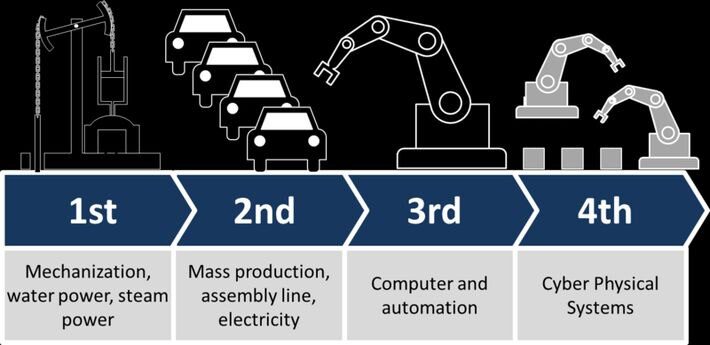
The Fourth Industrial Revolution, also known as 4IR, or Industry 4.0, is a neologism describing rapid technological advancement in the 21st century. It follows the Third Industrial Revolution.
Industry 4.0, is characterized by the fusion of digital, physical, and biological worlds, driven by technologies like artificial intelligence, robotics, the Internet of Things, and biotechnology. It’s a period of rapid technological advancement that’s disrupting industries and transforming how we live and work.
Here’s a breakdown of key aspects:
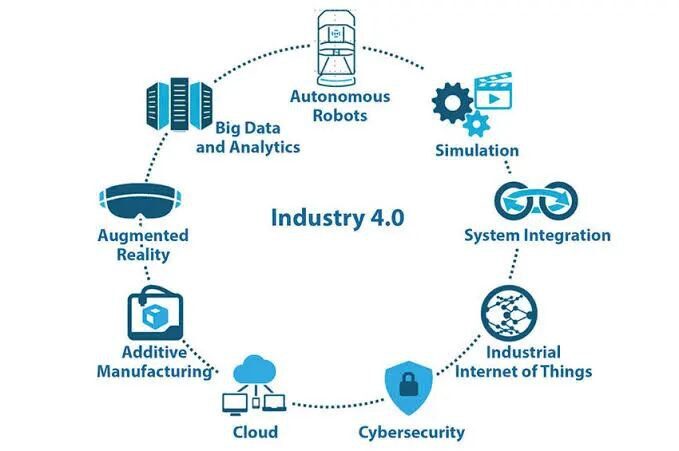
1. Core Technologies:
- Artificial Intelligence (AI) and Machine Learning (ML): AI imbues machines with human-like decision-making capabilities, learning and adapting to new situations.
- Robotics: Advanced robots with powerful hardware, sensors, and sophisticated programming enhance efficiency and perform complex tasks.
- Internet of Things (IoT): Connects devices and systems, enabling real-time data exchange and creating interconnected networks.
- Big Data Analytics: Analyzing vast datasets to extract valuable insights and improve decision-making.
- Cloud Computing: Provides on-demand access to computing resources and data storage, facilitating scalability and flexibility.
- 3D Printing (Additive Manufacturing): Enables rapid prototyping, decentralized manufacturing, and the creation of complex geometries.
- Augmented and Virtual Reality (AR/VR): Creates immersive and interactive experiences for training, design, and remote collaboration.
- Simulation: 3D simulations of machines, products, and processes for optimization and testing.
2. Key Concepts:
- Cyber-Physical Systems (CPS): Systems that integrate computation, networking, and physical processes, enabling real-time interaction between the digital and physical worlds.
- Smart Factories: Factories that leverage IoT, AI, and automation to optimize production, improve efficiency, and enhance flexibility.
- Horizontal and Vertical System Integration: Connecting different systems and departments within an organization and across the supply chain.
3. Impact and Implications
- Increased Productivity and Efficiency: Automation and data-driven insights lead to optimized processes and reduced costs.
- New Business Models: Enables personalized products, on-demand manufacturing, and new service offerings.
- Transformative Changes Across Industries: Impacts manufacturing, healthcare, transportation, and many other sectors.
- Potential for Disruption and Job Displacement: Requires adaptation and workforce reskilling to address the changing job market.
- Need for Ethical Considerations: Addresses issues like data privacy, algorithmic bias, and the responsible use of AI.
4. The Fourth Industrial Revolution is characterized by
- Speed: Rapid technological advancements and adoption rates.
- Scope: Ubiquitous impact across all industries and societies.
- Systems Impact: Transforming entire systems and industries, not just individual products or processes.